01
Business acumen
We start with your model, your economics, your goals, not the technology.
If that’s you, you’re not alone. Every company in every sector is trying to figure out what to do, when the next shift is coming, and how it’s going to hit their business.
Here’s the test: how do you know whether you should spend $5,000 or $500,000 on AI? If that’s hard to answer, you don’t need another tool. You need a strategy.
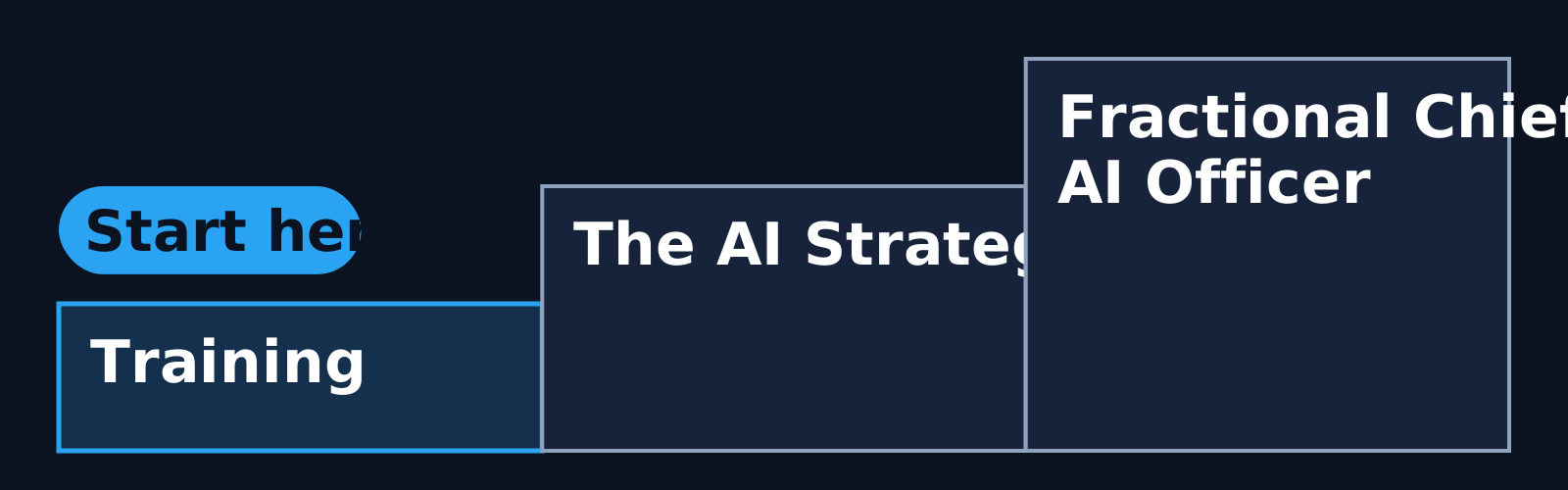
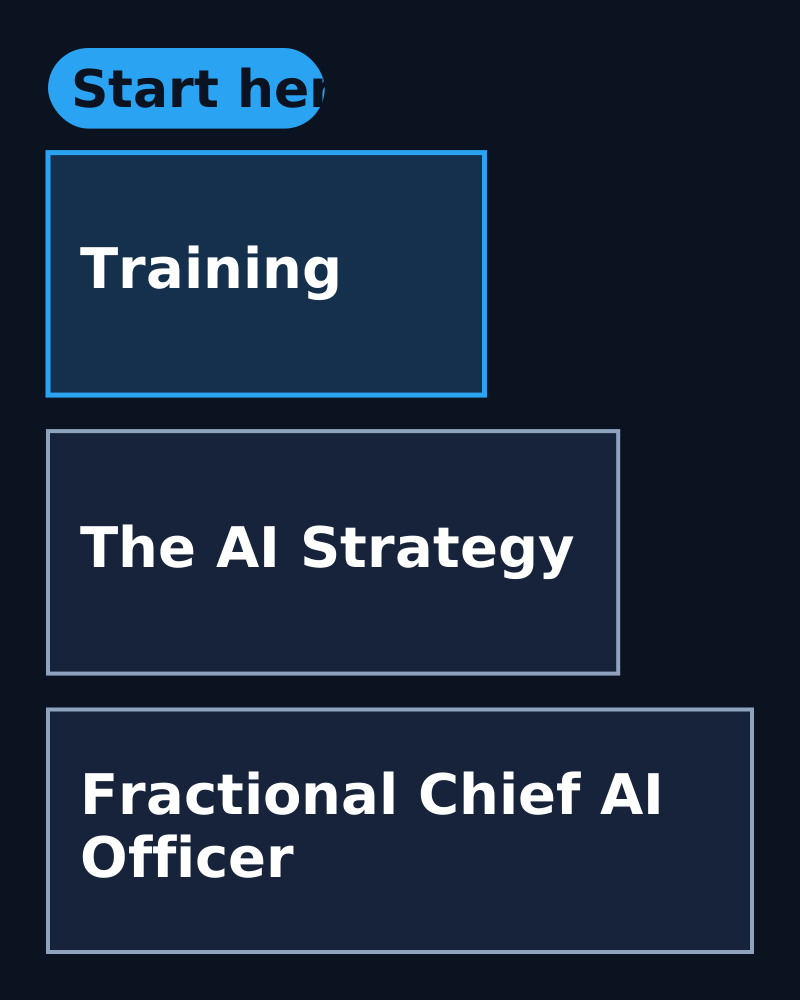
Learn where AI fits, how to do the math and how your people feel about it.
The foundationA survey of your team and leaders, a working session, and a strategy with a first 90-day plan.
Someone in the seatA senior person whose main job is your AI, part time.
The models, the tools, the best practices: all of it changes week to week. Staying current isn’t a stretch goal, it’s more than a full-time job. No leader running a business has that kind of time, and pretending otherwise is how good companies quietly fall behind.
You’ve probably already stood up a working group to handle it. Smart move. But for everyone on it, AI is a part-time job, and keeping up is more than a full-time one. So the group does its best while the field keeps moving faster than a few hours a week can track.
That’s what we do, every day. We live at the front of this so your people don’t have to, and we bring it back to what matters: AI woven into your business strategy, not bolted on beside it. You get the clarity and the direction without pulling your leadership off the business to keep pace.
We’ve spent 25+ years inside real organizations, leading technology through wave after wave of change. We know the tyranny of the now: the day job never stops, the tactics never stop, and something as consequential as AI demands the kind of sustained, focused attention the daily grind makes almost impossible to give. That sustained attention is exactly what we bring.
You don’t need to become an AI expert. You need someone in your corner who already is, and who speaks the language of your business, not just the technology.
Most AI help is one-dimensional: technologists who don’t speak business, or strategists who can’t build. The decisions you’re facing sit right where all three meet.
We start with your model, your economics, your goals, not the technology.
25+ years leading real engineering organizations through real change.
Deep, current fluency in what AI can and can’t do for a business like yours.
Our job isn’t to be the hero of your story. It’s to make sure you are, with the clarity and the direction to lead your organization through this well.
Every engagement starts the same way: we get clear on where AI fits your business, then give you a way to act on it that keeps pace with how fast this moves.
We start with leadership: the owner or founder at smaller companies, the leadership team at larger ones. Then we work down into the business units and people who do the work, to put the plan into practice.
We align AI with your business and learn how your organization works, starting with a survey of your team and leaders, so we know where you stand before we plan. Out of that comes two things: the strategy, your overarching vision for how AI serves the business, and the first 90-day tactical plan, concrete execution you can start on now. Nobody can plan a rigid two-year AI roadmap when the ground moves this fast. So the strategy stays steady and sharpens over time, while the tactics move in 90-day cycles, each one shipping something real, then feeding what you learn back into the strategy.
Fractional CTO and CAIO level guidance as the strategy evolves and the next cycles get set.
A fractional role inside your organization whose focus is AI: the strategy, and how it rolls out across the business.
Not just designed and planned. We help build and deliver the AI resources the strategy calls for.
Tool and model selection, on-prem versus cloud, organizational advocacy, training, and support.
It’s not a tool game. It’s a strategy game.
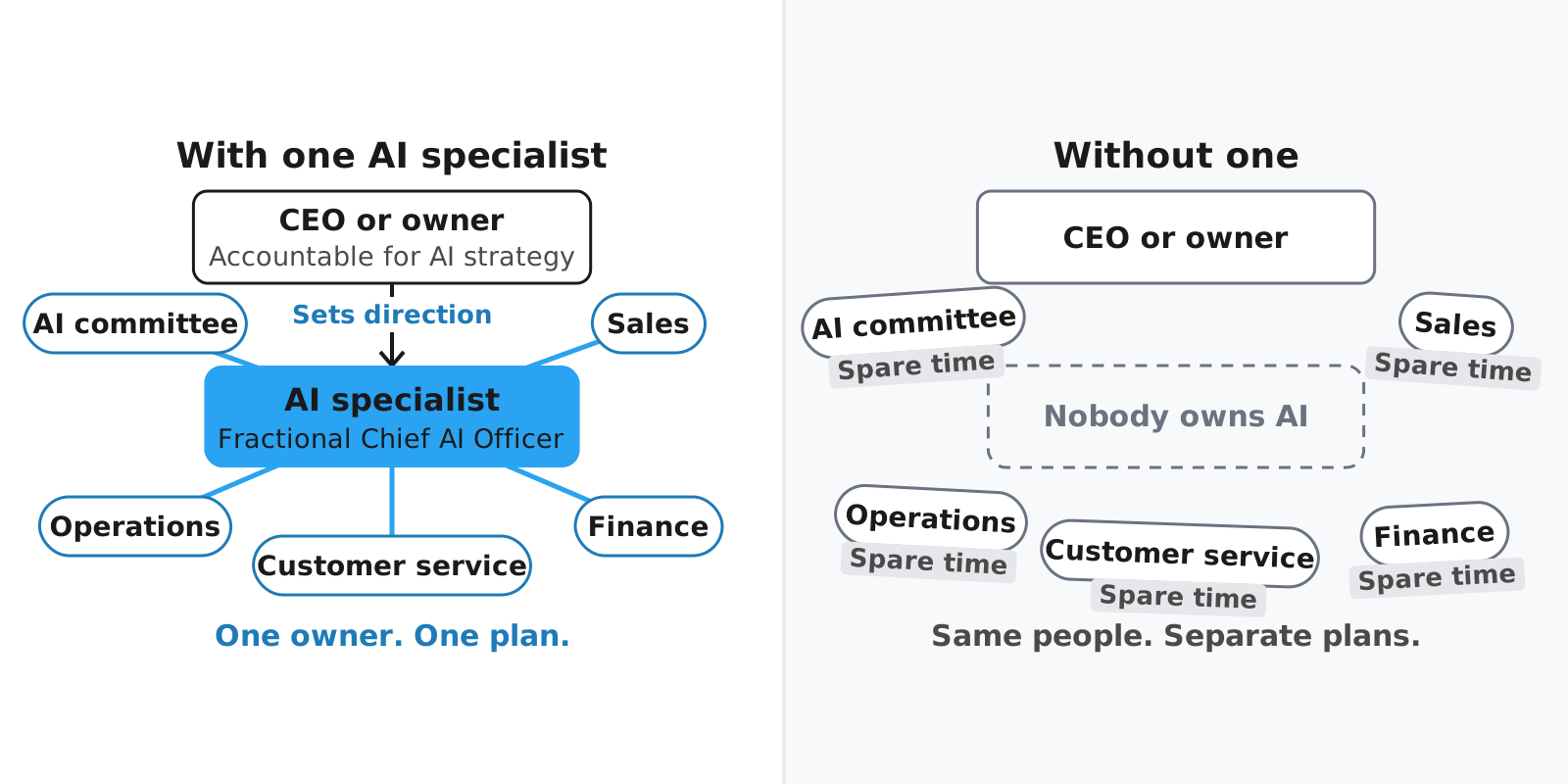
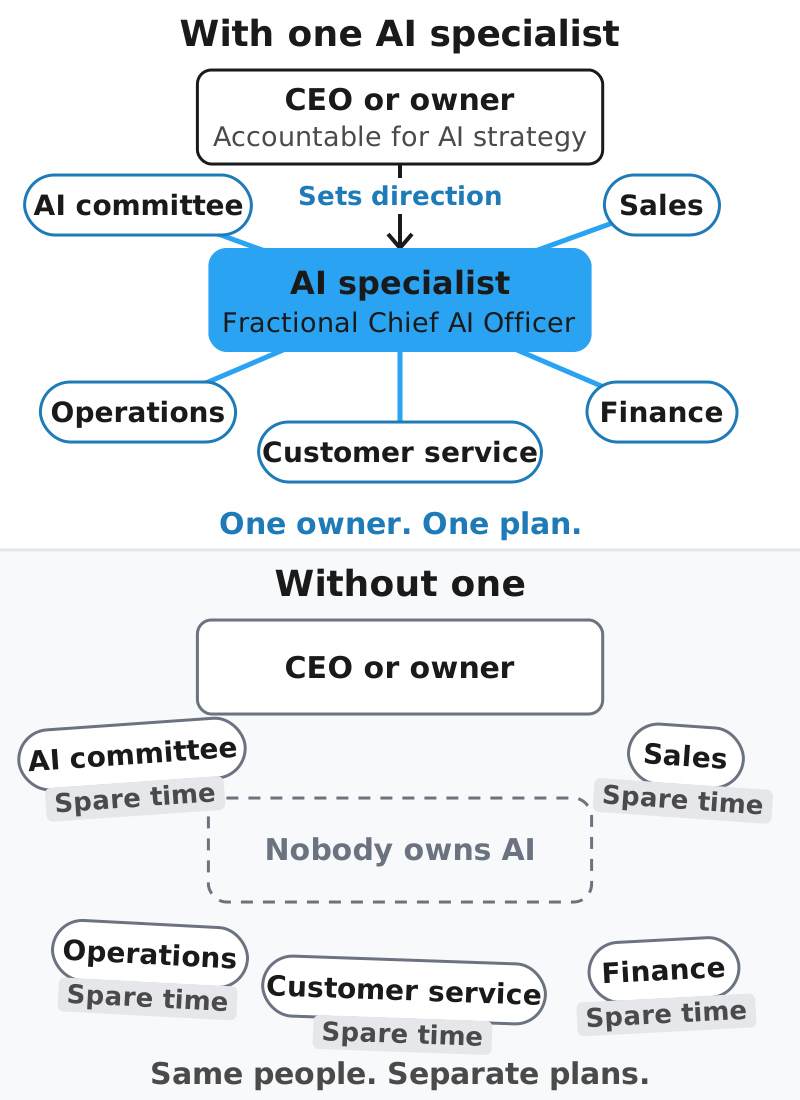
In most companies, AI gets added to someone's list. It goes to the IT leader, the most curious employee or a committee where each department picks its own tools. That person still has a day job, and there are only so many hours in a day. The AI work waits every time the day job calls.
Drag6 gives you one senior person whose only job is AI, part time. Like any new leader, we start by learning your business and building your AI strategy. Then we stay on to run it in 90-day cycles, with our agency and agent services behind the work. A full-time hire in the closest federal pay category costs about $250,000 a year with benefits, and fractional leadership costs a fraction of that.
Not sure who owns AI at your company? Start with a strategy call.
Footnote: BLS OEWS May 2025 US median wage for computer and information systems managers (11-3021), $175,140, divided by the 70.0% wages share of employer costs (BLS ECEC, June 2026). $175,140 ÷ 0.700 = $250,200. BLS has no Chief AI Officer code.
When AI is built on a clear strategy instead of bolted on in a panic, the whole picture changes.
Every AI decision traces back to a real business need and a clear reason.
Money goes to what moves the business, not to whatever was loudest.
People are freed for the work only they can do.
You set the direction on AI instead of reacting to it.
I started Drag6 after 25+ years leading technology organizations through change, because I kept seeing the same thing: the companies that win with AI are the ones who get clear before they spend. That clarity is what we help you find.
Jason Swafford, Founder
No pitch. Just a conversation about what you’re dealing with.
Prefer a time on the calendar?Book a 30-minute call